Landlord Gas Safety Certificates & Property Compliance
Annual landlord gas safety inspections (CP12), combined service visits, and priority support for rental properties — from a single let to a full portfolio. All work carried out by our own Gas Safe registered engineers.
AnnualLegal requirement, every 12 months
28-day ruleCertificate provided to tenants
Gas SafeRegistered engineers
Annual CP12 certificates
Renewal reminders
Priority tenant repairs
Multi-property scheduling
What we can help with
Landlord gas safety inspections and CP12 certificates
Combined CP12 + annual boiler service visits
Emergency and priority repairs for tenanted properties
Void-period servicing between tenancies
Scheduling across multiple properties or a full portfolio
Working directly with letting and managing agents
Carbon monoxide and smoke alarm checks
Reminders before your next certificate is due
Clear, itemised invoicing for landlords and agents
Reliable, safely maintained heating for every tenant
Your obligations
Your legal responsibilities as a landlord
Under the Gas Safety (Installation and Use) Regulations 1998, landlords must have every gas appliance and flue in a rental property checked at intervals of no more than 12 months, by a Gas Safe registered engineer. The record — commonly called a CP12 or landlord gas safety certificate — must be given to existing tenants within 28 days of the check, and to new tenants before they move in. Landlords are required to keep copies of gas safety records for at least 2 years.
The Health and Safety Executive (HSE) enforces this legislation, and non-compliance can lead to unlimited fines or prosecution. A missing or out-of-date gas safety record can also prevent a landlord from serving a valid possession notice on a tenant.
This is general guidance, not legal advice. Requirements can change and individual circumstances vary — check current guidance on gov.uk or with a legal adviser for your specific situation.
What we check
What's checked during a landlord gas safety inspection
Our engineers check every gas appliance, flue and gas fitting in the property — including boilers, gas fires, gas cookers and hobs where provided by the landlord — for safe operation, correct ventilation, and safe removal of combustion gases. We also check appliance pressures, safety devices, and physical stability of each appliance.
While we're on site, it's also a good time to check smoke and carbon monoxide alarm coverage. Rental properties in England need a smoke alarm on every storey with a habitable room, and a carbon monoxide alarm in any room with a fixed combustion appliance (other than a gas cooker) — including rooms with a gas boiler or gas fire. We can check and advise on alarm coverage as part of your visit.
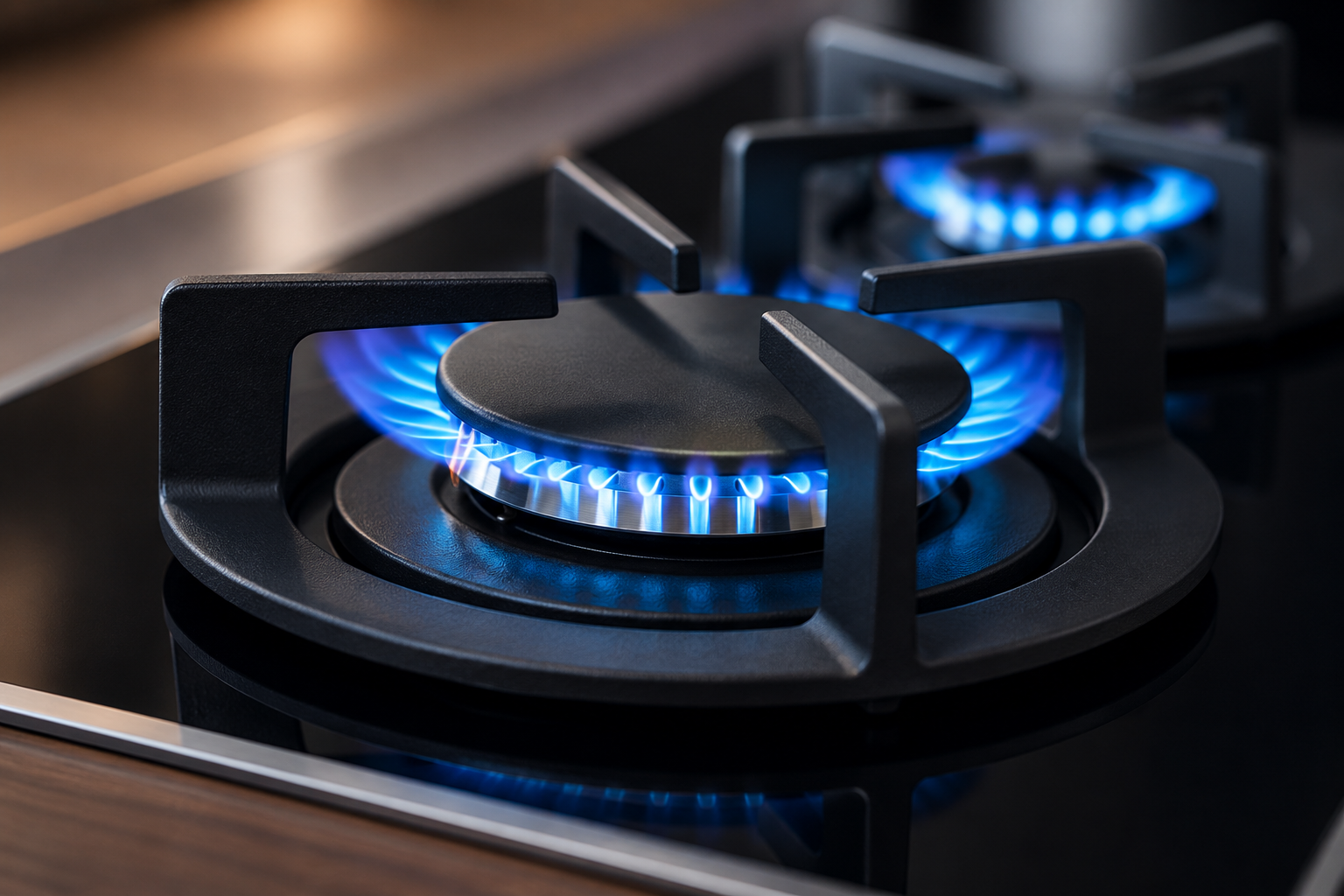
Gas cookers and hobs are checked along with every other appliance
One visit covers both the CP12 check and the annual boiler service
Combined visit
Save money by combining your CP12 and boiler service
Your landlord gas safety inspection and your boiler's annual service both fall due every 12 months, so in almost every case there is no reason to book them as two separate visits. Because our engineer is already on site with test and combustion analysis equipment connected for the CP12, carrying out the boiler service at the same time takes far less additional time than a standalone visit — and we pass that saving straight on to you.
A standalone CP12 and a standalone annual boiler service are each priced individually on our prices page, but booked together as a combined visit they come to less than the two would cost separately. This is worth doing well beyond the saving, too: one visit means one set of access arrangements for your tenant instead of two, one invoice for your records, and a boiler that is inspected and serviced in the same sitting rather than at two different points in the year.
It also means fewer opportunities for something to be missed. An engineer who has just serviced the boiler and carried out the full gas safety check on the same visit has a complete, up-to-date picture of the appliance's condition — rather than piecing together two visits carried out months apart, potentially by different engineers.
If you would like to move your existing boiler service and CP12 onto the same date going forward, let us know when you next book and we'll get both aligned to a single annual visit.
Smoke and carbon monoxide alarms — why both matter, not just one
It is easy for alarm compliance to feel like an afterthought next to the gas safety certificate itself, but smoke alarms and carbon monoxide (CO) alarms protect against two completely different hazards, and having one does not cover for a missing or faulty other. A smoke alarm detects fire. A CO alarm detects carbon monoxide — a gas produced when fuel does not burn completely, which has no colour, no smell, and no taste. Without a working CO alarm, there is often no way for anyone in the property to know it is building up until they are already experiencing symptoms.
Carbon monoxide poisoning is frequently mistaken for flu or simple tiredness in its early stages — headaches, nausea, dizziness, and fatigue — which is exactly what makes it dangerous. By the time symptoms are severe enough to be unmistakable, exposure may already be significant. This is why a working CO alarm, correctly placed, matters just as much as the gas appliance itself being safe: it is the backup that protects a tenant if something does go wrong between visits, such as a flue becoming blocked or a fault developing in a boiler or gas fire.
Under current regulations, rental properties in England must have a smoke alarm fitted on every storey used as living accommodation, and a carbon monoxide alarm in any room containing a fixed combustion appliance — this includes rooms with a gas boiler or gas fire, not just solid fuel appliances. Landlords are required to make sure alarms are in working order at the start of each new tenancy, and it is good practice to test both as a routine part of every annual visit rather than waiting for a tenant to report a problem.
Placement matters as much as simply having an alarm fitted. A CO alarm positioned too close to, or too far from, the appliance it is meant to protect can be far less effective — as can a unit that has quietly reached the end of its working life. Most sealed CO alarms have a manufacturer lifespan of around ten years, after which they need replacing entirely rather than just having their battery changed, and this is easy to miss if it is not checked deliberately.
We check smoke and CO alarm coverage, placement, and condition as standard on every landlord gas safety visit — not as an optional extra — and can supply and fit replacement or additional alarms on the spot where they are needed.
This is general guidance, not legal advice. Requirements can change and individual circumstances vary — check current guidance on gov.uk or with a legal adviser for your specific situation.
Portfolio landlords & agents
Managing more than one property?
Whether you're a landlord with a handful of properties or a letting agent managing a portfolio, we make gas safety compliance straightforward. One point of contact, batch scheduling across multiple addresses, and reminders sent ahead of each certificate expiring — so nothing gets missed between tenancies.
We can also carry out void-period servicing between tenants, picking up any faults early and keeping the property tenant-ready, and provide clear, itemised invoicing that's easy to pass on to landlords or process for your accounts.
A single point of contact for scheduling across your properties
Why choose Splix?
Missing a renewal date is one of the most common (and most avoidable) compliance problems landlords face. We keep track of when each property's certificate is due and get in touch ahead of time to get it booked in — rather than leaving it until the certificate has already lapsed.
All inspections are carried out by fully vetted, Gas Safe registered engineers, so you get consistent, accountable service on every visit, whichever property it's for.
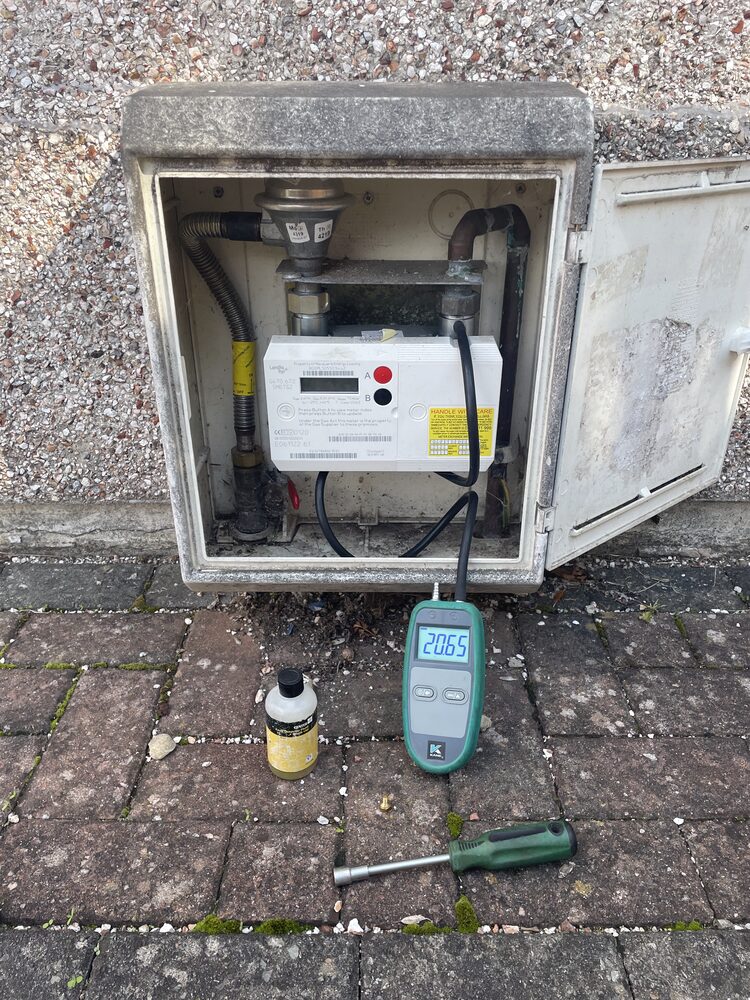
A recent landlord gas safety inspection carried out by our team
Frequently asked questions
How often do I need a landlord gas safety check?
At least once every 12 months, carried out by a Gas Safe registered engineer. We'd recommend booking your next check a few weeks before the current certificate expires, so there's no gap in cover — and we can send you a reminder ahead of the renewal date.
What happens if I don't get a CP12 done on time?
You'd be in breach of the Gas Safety (Installation and Use) Regulations 1998, which the HSE can enforce with unlimited fines or prosecution. It can also affect your ability to serve a valid possession notice on a tenant. If your certificate has lapsed or is close to expiring, get in touch and we'll prioritise getting you booked in.
Do you work with letting agents and manage multiple properties?
Yes. We regularly work directly with letting and managing agents, and can schedule visits across a portfolio of properties with one point of contact, clear itemised invoicing, and reminders ahead of each certificate renewal.
Do rental properties need carbon monoxide alarms?
Yes — landlords in England must fit a carbon monoxide alarm in any room with a fixed combustion appliance other than a gas cooker (this includes rooms with a gas boiler or gas fire), and a smoke alarm on every storey with a habitable room. We can check your current alarm coverage as part of a gas safety visit.
See our prices page for standard CP12 and combined CP12 + service fees.