Professional central heating powerflushing across Bristol, Bath, and the surrounding areas. Removes magnetite sludge, scale, and corrosion debris to restore heating efficiency, protect your boiler, and extend the life of your entire system.
High-velocityProfessional equipment
Inhibitor + filterLong-term protection included
Full systemEvery radiator, boiler & pipe
What is powerflushing?
Powerflushing is a deep-cleaning process for sealed central heating systems. A specialist high-velocity pump is connected to your heating circuit and circulates powerful cleaning chemicals through the pipework, radiators, and boiler at high flow rates. This dislodges and flushes out the accumulated corrosion products, sludge, and debris that build up naturally over time in UK heating systems.
The process restores proper water circulation and heat transfer throughout the system. Once complete, a corrosion inhibitor is added to protect the system long-term, and a magnetic filter is recommended to capture any remaining iron oxide particles in circulation.
Diagnosis
How we confirm a powerflush is needed
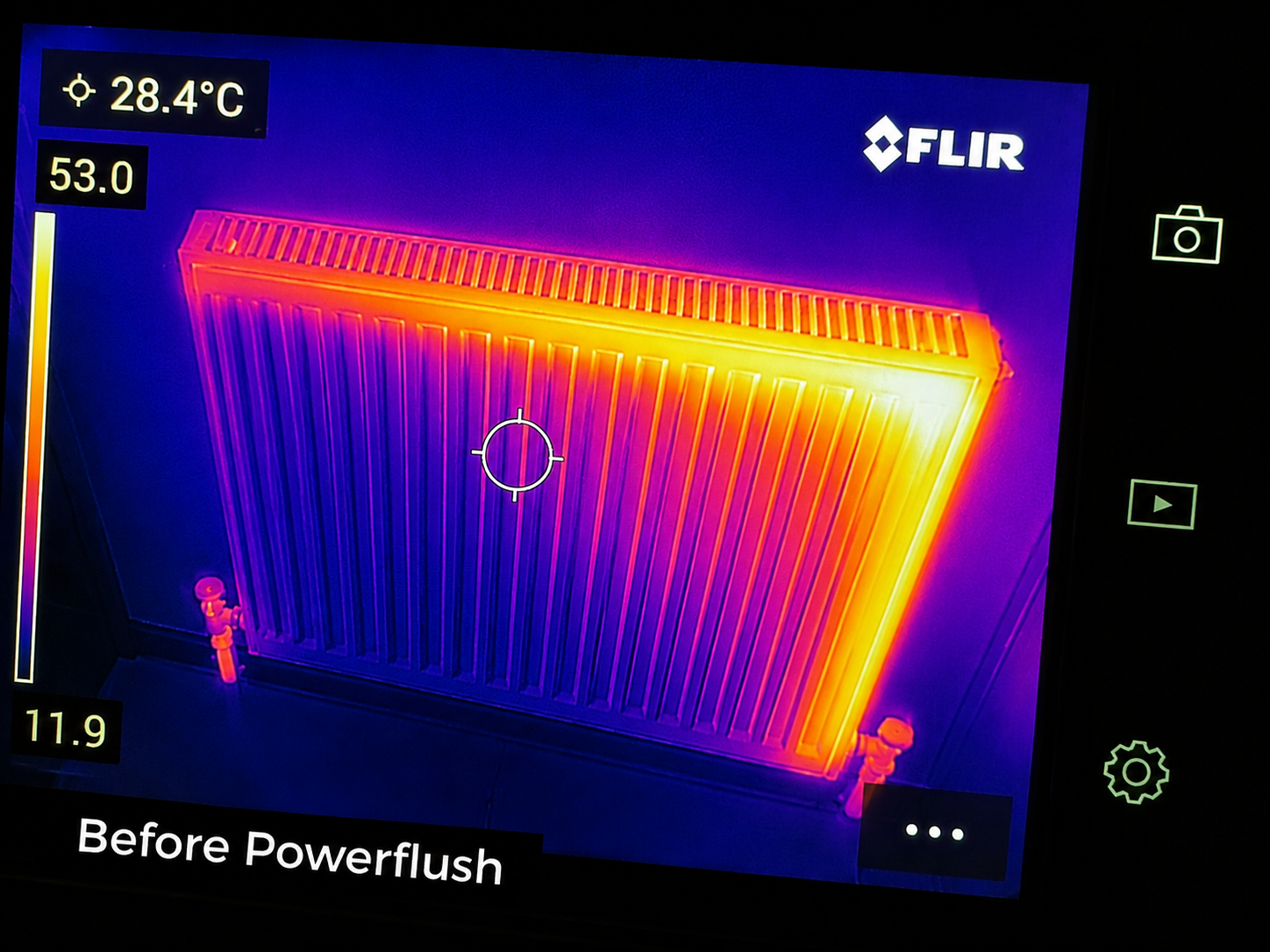
Rather than guessing, we assess the system before recommending a powerflush. A thermal imaging camera is a useful diagnostic tool — it shows cold patches on a radiator that a hand check alone can miss, revealing exactly where sludge and debris have settled inside the system.
This kind of assessment helps confirm whether a powerflush is the right solution, or whether another issue — such as a balancing problem or a faulty valve — is actually causing the symptoms you're seeing.
A thermal image taken before a powerflush, showing cold spots caused by internal sludge
Signs you may need a powerflush
Cold spots at the bottom of radiators
Boiler making banging, kettling, or rumbling noises
Radiators slow to heat up or not heating evenly across the house
Frequent boiler lockouts or unexplained pressure loss
Dark or dirty water when bleeding radiators
High energy bills without a clear cause
Repeated pump failures or noisy pump operation
Poor hot water performance from a stored hot water system
Why heating systems corrode
Most UK domestic heating systems contain a combination of different metals — typically mild steel radiators, copper pipework, brass valves, and aluminium heat exchangers. When water, heat, and dissimilar metals interact inside a sealed system, electrochemical corrosion reactions occur naturally over time.
The most common result is magnetite — a black magnetic iron oxide (Fe₃O₄) that forms when steel and iron components corrode internally. These fine particles circulate through the system and gradually settle in areas of low flow: the bottoms of radiators, boiler heat exchangers, circulating pumps, pipe bends, and motorised valves. Over time, the build-up restricts water circulation and reduces the efficiency of the entire system.
Modern condensing boilers are particularly sensitive to this kind of contamination because they contain compact heat exchangers with narrow internal waterways. Even modest sludge accumulation can restrict flow, force the boiler to work harder, and — in serious cases — block the heat exchanger entirely.
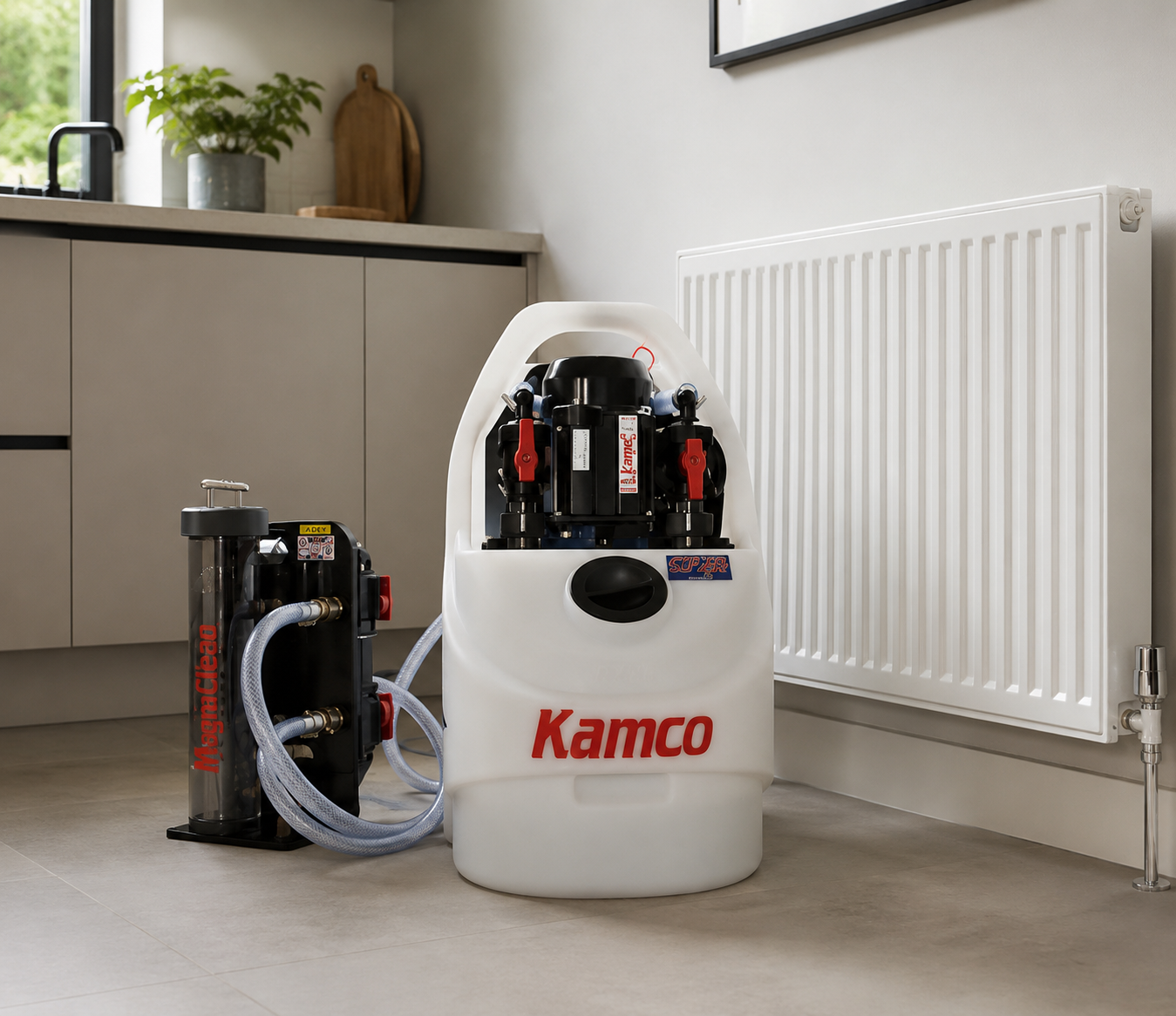
Professional powerflushing equipment connected to the heating circuit
Equipment
Professional powerflushing equipment
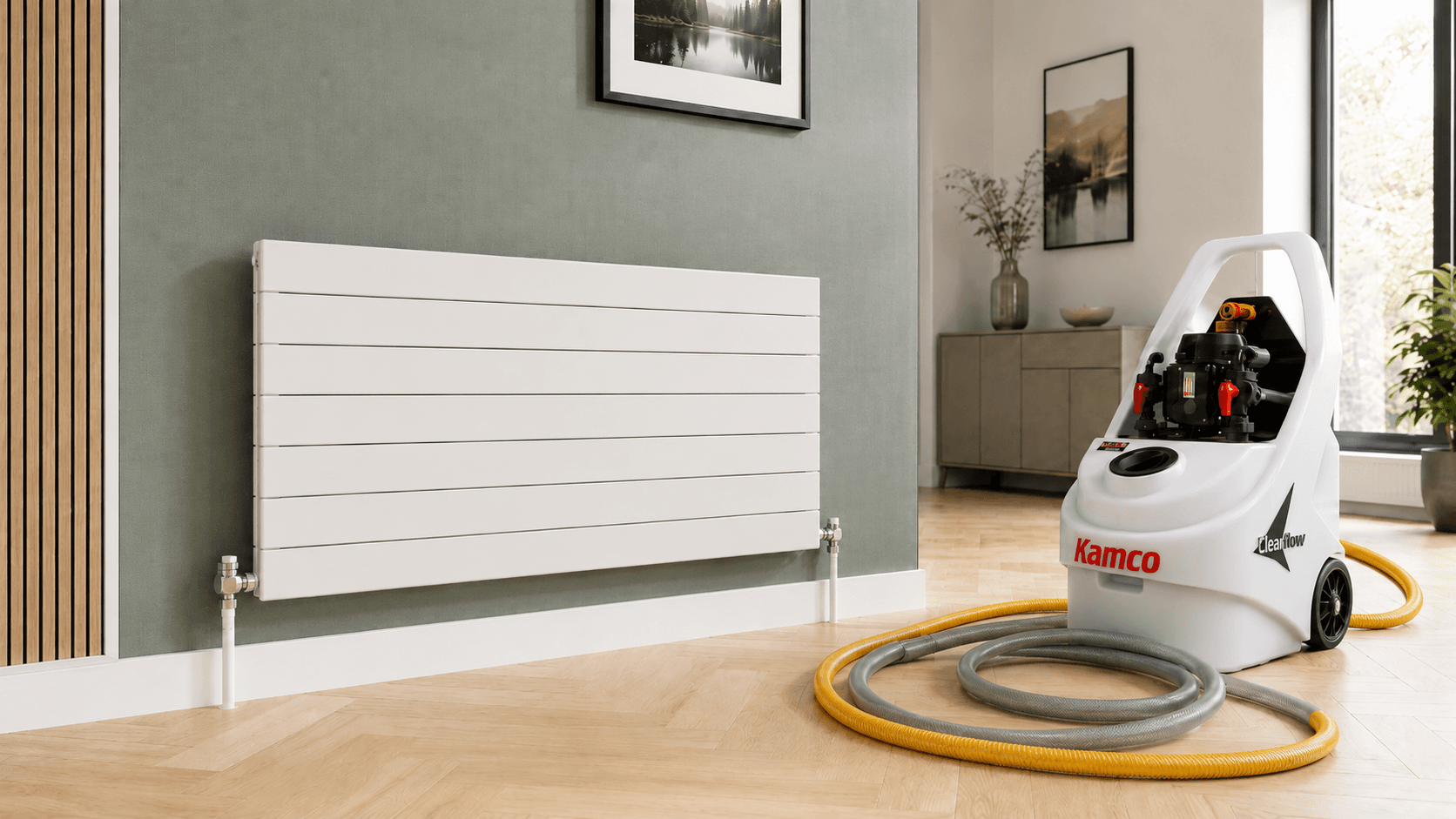
We use professional-grade powerflushing machines to circulate cleaning chemicals through your system at high velocity. Reversing flow direction and pulsing pressure through the pump helps to dislodge debris that a standard flush would leave behind.
Every radiator is isolated and flushed individually, rather than relying on a single pass through the whole circuit — this is what makes the difference between a proper powerflush and a quick chemical clean.
What the service includes
Full system assessment before work begins
High-velocity flushing with professional powerflushing equipment
Specialist chemical treatment to break down and remove deposits
Individual radiator flushing throughout the circuit
Boiler and heat exchanger flushing where accessible
System water testing before and after
Corrosion inhibitor dose on completion
Magnetic filter installation recommendation and supply
Final water quality check before sign-off
Ongoing protection
Long-term protection — inhibitor and magnetic filtration
A powerflush cleans what is already there. To prevent the same problems recurring, ongoing protection is important. We add premium corrosion inhibitor to the system on completion — this neutralises corrosion reactions, reduces scale formation, and protects the mixed metals in your heating circuit.
We also recommend the installation of a magnetic system filter. These devices sit inline on the heating circuit and continuously capture iron oxide particles as they circulate, removing them before they can settle in radiators or the boiler. Inhibitor levels should be checked annually — ideally at the same time as your boiler service.
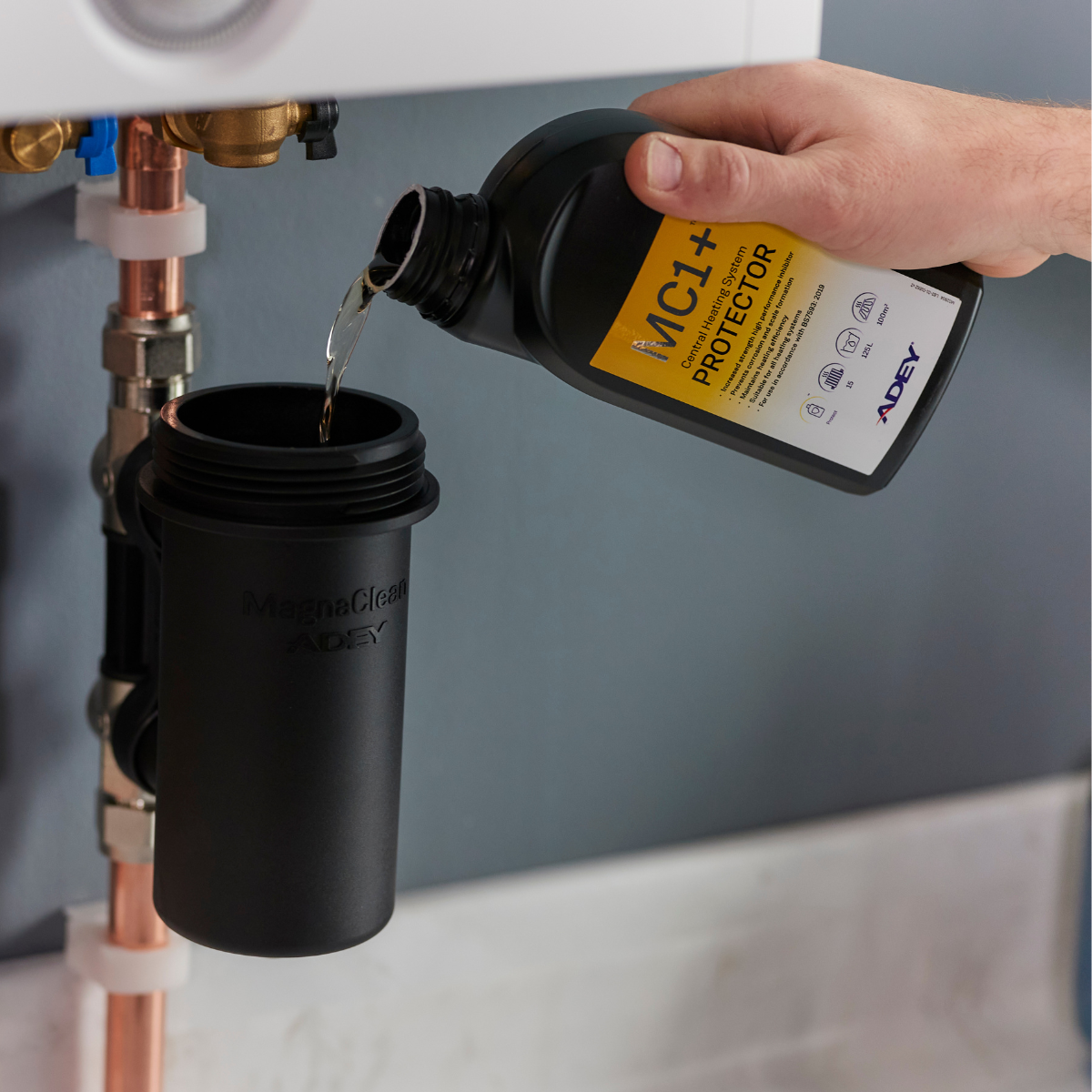
Corrosion inhibitor being dosed into a magnetic system filter on completion
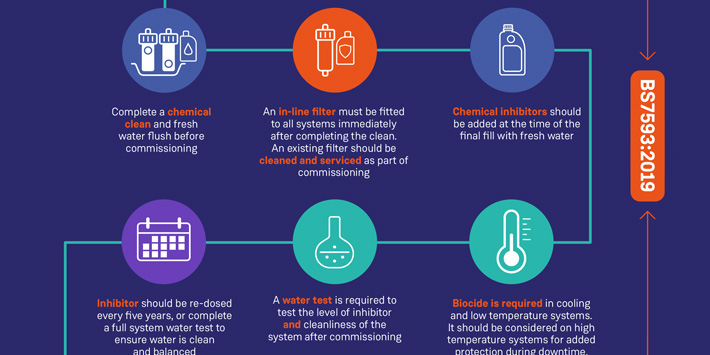
Our approach follows British Standard BS 7593:2019 guidance on treating water in wet central heating systems
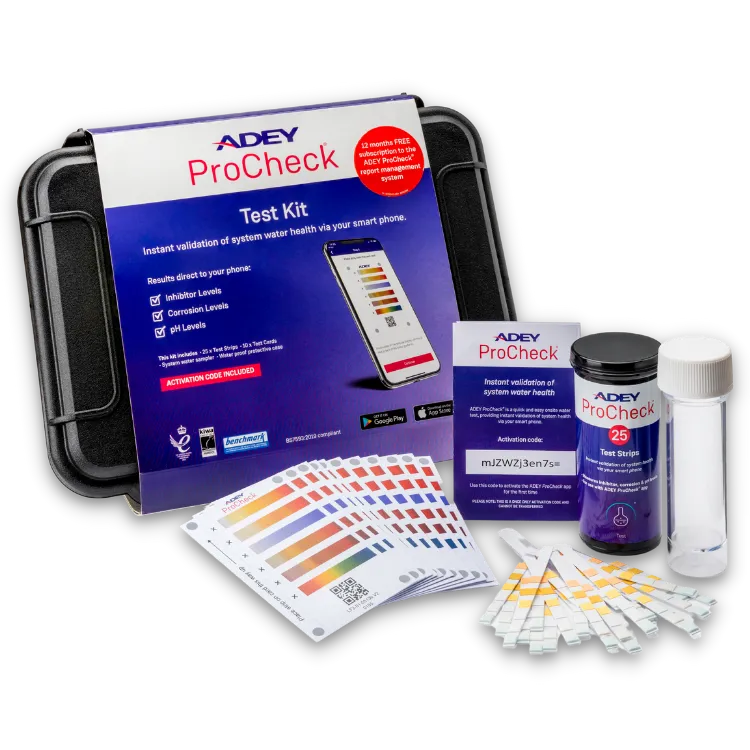
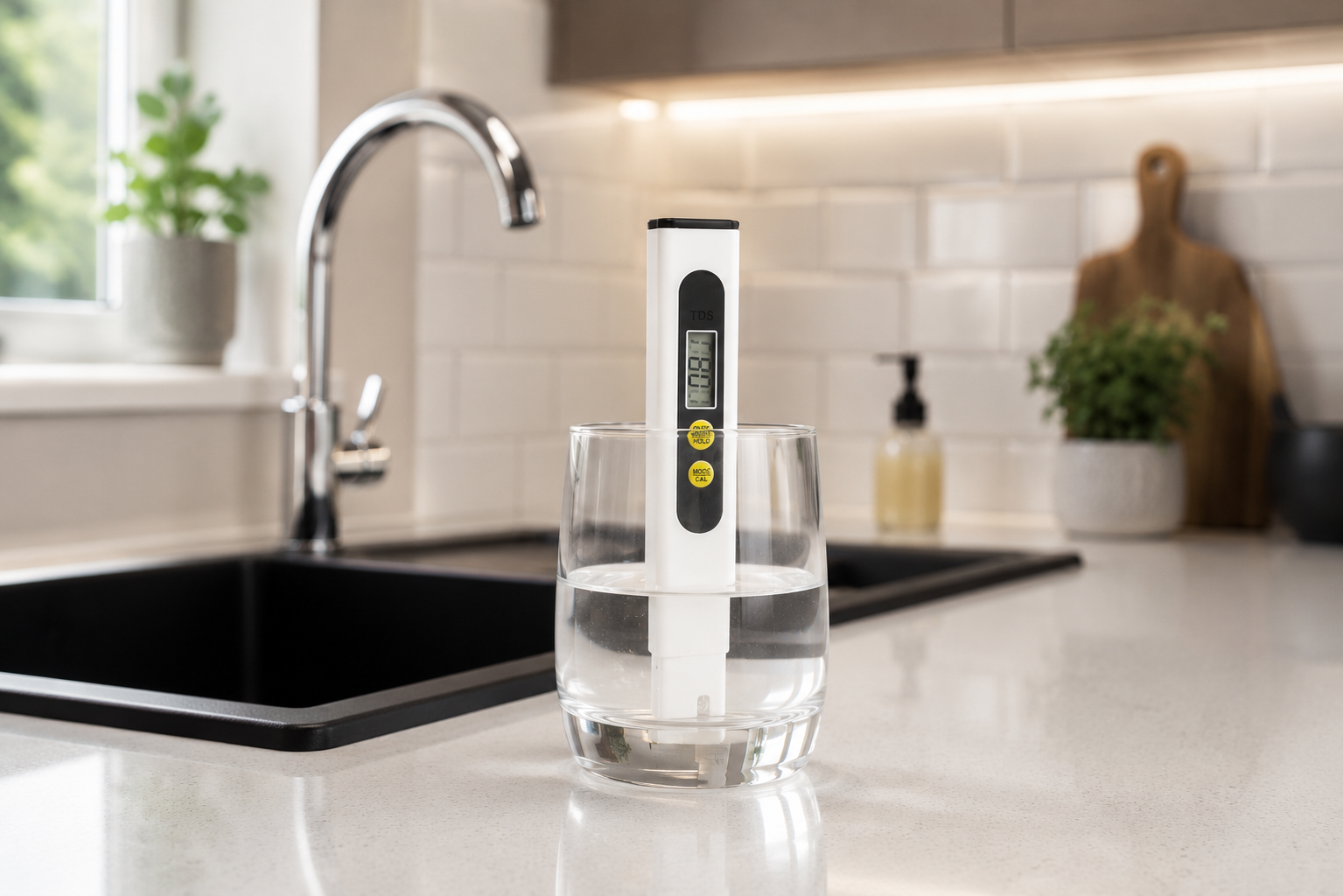
A water sample test kit — used to check inhibitor concentration and system cleanliness
Water testing
Checking your system's water quality
We take a water sample from your heating system before and after a powerflush. Testing shows inhibitor concentration, pH, and general cleanliness — giving a clear, evidence-based picture of the system's condition rather than relying on guesswork.
Monitoring
Ongoing monitoring between services
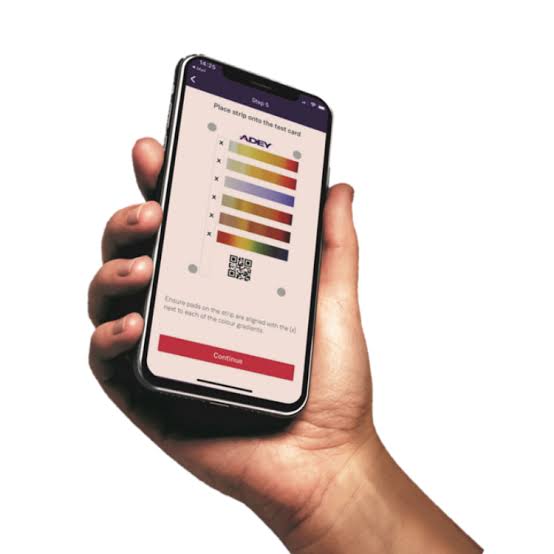
Manufacturer testing apps can log inhibitor readings over time, making it easy to see how your system is holding up between visits. We recommend re-checking inhibitor levels annually — ideally at the same time as your boiler service — so any drop in protection is caught early.
A water test result being logged using a manufacturer testing app
A final water quality check, carried out before sign-off
Why choose Splix?
A powerflush is only worthwhile if the system is properly assessed first and the work is carried out thoroughly. We use professional-grade equipment and take the time to flush every part of the circuit individually — not just a single pass through the system. Our approach is grounded in a practical understanding of heating system chemistry and corrosion science, not just a process checklist.
We work with homeowners across Bristol, Bath, and the wider region, providing honest advice on whether powerflushing is the right solution — or whether another issue is the underlying cause of poor heating performance.
Frequently asked questions
How do I know if my system needs a powerflush?
The most common indicators are cold spots at the bottom of radiators, radiators that are slow to heat up, boiler kettling noises, and dirty water when radiators are bled. If your boiler is working but the house is not heating as well as it used to, sludge accumulation is a common cause. We assess systems before committing to a powerflush to confirm it is the appropriate solution.
Will powerflushing damage my boiler or radiators?
When carried out correctly on a system that is suitable for the process, powerflushing does not damage a boiler or radiators. However, it is not always appropriate — for example, very old or already corroded systems may have weakened components that would not withstand the process. This is one reason we assess the system first and discuss our findings with you before starting any work.
What is a magnetic filter and do I need one?
A magnetic filter is a device fitted inline on the heating circuit — usually near the boiler return — that contains a powerful magnet. As heating water circulates, iron oxide particles are drawn to the magnet and captured before they can settle in the system. They are cleaned at every service. Many boiler manufacturers now recommend or require a magnetic filter as part of installation, and they are one of the most cost-effective ways to protect a heating system long-term.
How long does a powerflush take?
Most powerflushes are completed in a single visit, typically taking somewhere between three and six hours depending on the size of the system and how contaminated it is. We'll give you a realistic timescale once we've assessed your system, rather than a generic estimate.